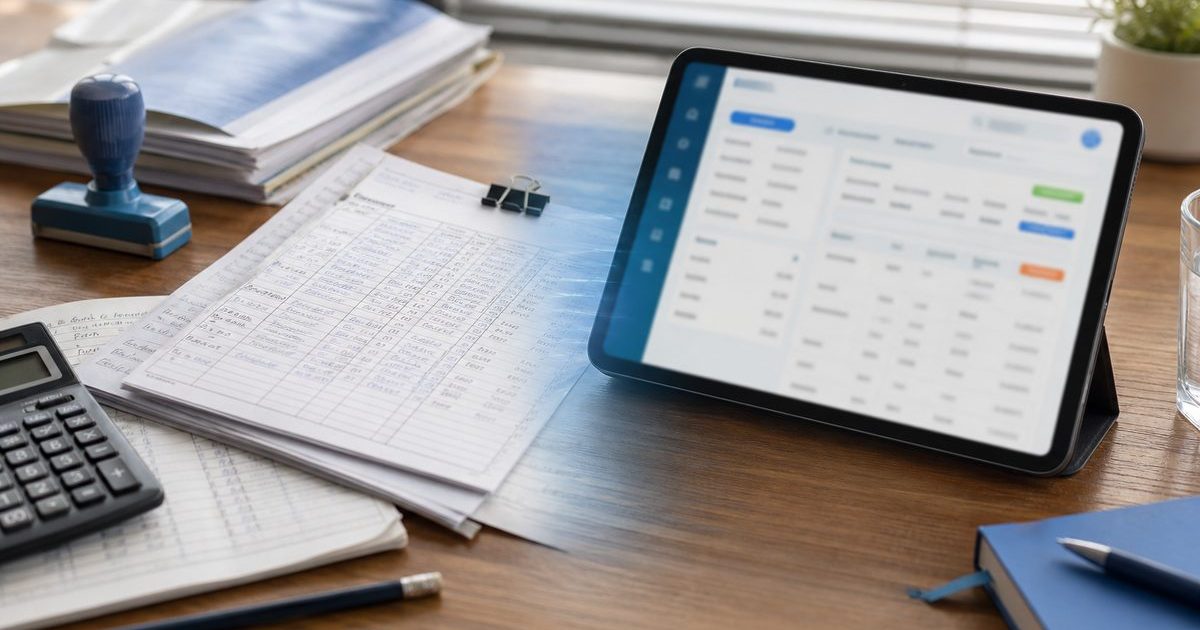
Some water associations still run billing on paper: handwritten meter sheets, calculator totals, invoices typed or printed one at a time, and envelope-stuffing parties before mail day. It works until the treasurer burns out, a rate change introduces errors, or members ask why they cannot pay online.
Whether you call it switching from paper water bills or upgrading to online billing from paper, the goal is not forcing every member onto a website on day one. It is about replacing fragile manual steps with one system that generates bills, mails them if you want, and gives members a portal to pay and view usage while check and cash payers stay welcome. For payment-focused communication tips, see how to switch from paper water bills to online payments.
Quick answer
Switching or upgrading to online billing from paper means replacing handwritten meter sheets and manual bill calculations with one system for field reading, automated billing, optional mailed invoices, and a customer portal for balance and pay online. Online Water Bill typically onboards associations in about one week while keeping check, cash, and paper bill options for members who prefer them.
The Hidden Cost of Paper-Only Billing
Paper feels cheap because you already own the process. Boards underestimate:
- Hours each month on meter routes, calculation, and mailing
- Error correction when reads are transposed or tier math is wrong
- Evening phone calls: “What do I owe?” between bill dates
- Single-person dependency. If the clerk is sick, billing stops
- Lost checks, unclear payment application, manual deposit tracking
- Difficulty onboarding a new treasurer or volunteer bookkeeper
Deer Community Water Association in Newton County, Arkansas lived this reality before switching. Hand-calculated bills and paper routes led to five to ten complaint calls many evenings. After upgrading to Online Water Bill, those calls dropped to zero. Read the full Deer story.
What “Upgrading to Online Billing” Actually Includes
Boards sometimes hear “online billing” and picture eliminating paper. A successful upgrade usually means:
- Digital meter reading. Mobile routes or AMR import instead of rekeying paper sheets
- Automated bill calculation. Tiered rates, fees, and penalties applied consistently
- Print and mail options. Tri-fold bills with return envelopes for members who prefer mail
- Customer portal. Balance, usage history, and pay online 24/7
- Office payment recording. Cash and check still posted in the same ledger
- Reminders and notices. Email or SMS for past-due accounts where members opt in
That is one workflow, not five separate tools. See rural water billing software basics for how the pieces fit together.
A Realistic Path from Paper to Online Billing
You do not need a year-long IT project. Associations on Online Water Bill typically:
- Spend about 1–2 hours on initial setup plus guided account import
- Enable online payments within a few days of go-live
- Complete migration in about one week, billing the next cycle in the new system
- Grow portal adoption over months as the URL appears on every bill
Steps in order:
- Gather what you have. Member list, meter numbers, service addresses, current balances, rate sheet, even if it lives in a spreadsheet or ledger today.
- Pick software built for water associations. Generic accounting packages rarely include meter reading and member portals. Compare options in what software rural associations use.
- Import and configure rates. Onboarding maps your fee structure before the first billing run.
- Train two people. Clerk plus backup treasurer or board member.
- Mail the first bill with the portal URL. Keep return envelopes for check payers. See switching from paper bills to online payments for communication tips.
- Review after one cycle. Board confirms deposits reconcile and member feedback before declaring victory.
Bringing Members Along Without Leaving Anyone Behind
Rural associations succeed when they treat online billing as an option, not a mandate:
- Print the portal URL and account number on every mailed bill
- Announce at the meeting and on Facebook. Show a phone paying a bill in thirty seconds
- Keep the office open for cash and check
- Let neighbors help neighbors create portal accounts
Across Online Water Bill associations, roughly half of customers register for the portal and about one third pay online without requiring everyone to change on day one. More tactics in how associations get customers to pay online.
Making the Case to a Volunteer Board
Paper billing persists because volunteers fear change more than they fear late nights stuffing envelopes. Frame the upgrade around outcomes trustees care about:
- Less clerk burnout. Automation on reads, fees, and reminders
- Fewer complaint calls. Members see balance online
- Continuity. Multiple logins; billing survives treasurer turnover (when the clerk retires)
- Clear pricing. One-time setup quoted by size; no monthly platform fee to the association
- Proof from peers. Deer case study and live customer portals to review before voting
Email the Association Guide PDF before the vote so trustees can review on their own time.
Frequently Asked Questions
Do we have to stop mailing paper bills?
No. Most associations keep mailed bills while online billing grows. The portal is an addition for members who want it.
We only have a spreadsheet today. Can we still upgrade?
Yes. Many migrations start from spreadsheets or handwritten lists. If you have account numbers, addresses, and balances, we can discuss import on the first call.
Will older members be left out?
They can keep mailing checks. Online billing reduces office calls for everyone; it does not require every member to use a computer.
Is online pay safe for a small water association?
Yes, when you use PCI-compliant processing like Stripe so card numbers never touch your office PCs. Read accepting online payments safely.
How much does upgrading from paper cost?
Online Water Bill quotes a one-time setup and onboarding fee by connection count with no monthly platform fee to the association. See water billing software cost for how pricing compares to paper labor and postage.
Is switching from paper water bills different from upgrading to online billing?
No. Both phrases describe leaving handwritten routes and manual calculations for one system with meter reading, automated bills, and a customer portal. For payment-focused communication tips, see how to switch from paper water bills to online payments.
Still billing on paper?
Tell us how your association runs billing today: meter routes, rates, and how you mail. We will show what upgrading to online billing looks like for your size and timeline.
The Bottom Line
See related guides below or reach out with questions about your association.