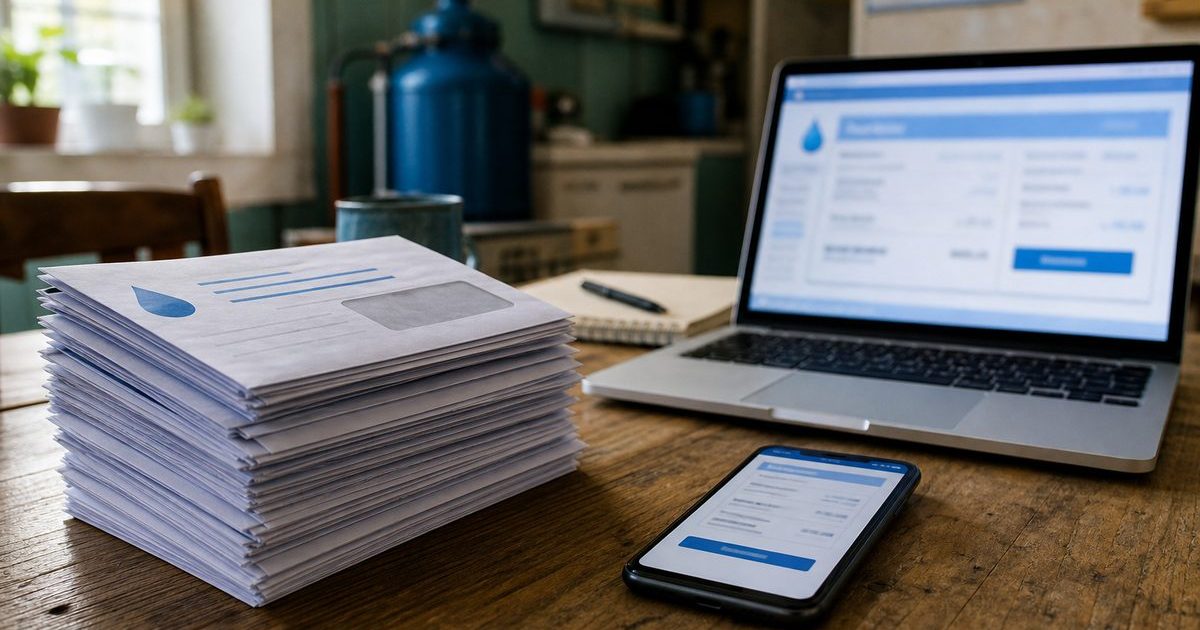
Many rural water associations still print bills, stuff envelopes, and wait for checks in the mail. That workflow works until postage climbs, the treasurer burns out, and members ask why they cannot pay online like their electric co-op.
Whether you call it switching from paper water bills or upgrading from paper to online payments, you do not have to abandon members who mail checks. The associations that succeed keep both paths open while they communicate clearly and print the portal URL on every invoice. For the broader billing upgrade (meter reading, automated calculation, and mailing), see upgrading to online billing from paper.
Quick answer
Switch or upgrade from paper water bills to online payments by choosing billing software that mails bills and runs a customer portal together, importing current accounts, enabling PCI-compliant card and ACH pay, printing the portal URL on every bill, and keeping check and cash options while online adoption grows over months.
Why Boards Move Beyond Paper Only
Paper billing is familiar, but it carries real cost:
- Printing, folding, stuffing, and postage every cycle
- Return envelopes for members who still pay by check
- Manual entry when checks arrive at the office
- Evening calls from members who cannot see balance between bills
- Single-person knowledge when one volunteer runs the whole cycle
Online payments and a customer portal do not replace your office. They give members self-service and reduce what you mail back each month.
Keep Paper Bills While Online Pay Grows
The mistake boards make is announcing paper billing is ending on day one. Rural members pay by check for habit, not hostility. Successful associations:
- Continue mailing tri-fold bills in outer envelopes with return envelopes
- Print the customer portal URL and account number on every bill
- Keep cash and check options at the office
- Let online adoption grow over months, not overnight
Across associations on Online Water Bill, roughly half of customers have a portal account and about one third pay online. That is a strong outcome for rural utilities. See how associations drive online payment adoption.
Steps to Switch or Upgrade from Paper to Online Payments
- Pick billing software that does both. Meter reading, billing, print/mail, and online pay in one system. See rural water billing software basics.
- Import current accounts. Guided onboarding should map members, balances, and rates before go-live.
- Connect payments safely. Use PCI-compliant processing so card data never touches your office computers. Read accepting online payments safely.
- Communicate before the first online bill. Tell members the portal is an option, not a mandate. Use email, Facebook, and a note in the mailed bill.
- Run one billing cycle in parallel. Mail paper bills and open the portal the same day so members can compare.
- Train the clerk and name a backup. Multiple logins prevent one volunteer from being the only person who knows the system.
Realistic Timeline
Switching feels risky until you see the steps written out. Most associations need about 1 to 2 hours of initial setup plus help importing accounts. Online payments often go live within a few days. Full detail is in our switching guide.
Deer Community Water Association moved off hand-written paper bills and complaint calls dropped to zero. Read the Deer story for a volunteer-led board that made the jump.
Still billing on paper only?
Tell us how your association mails bills today and who runs the monthly cycle. We will outline a realistic path to online payments without dropping check payers.
Frequently Asked Questions
Do we have to stop mailing paper water bills?
No. Most rural associations keep mailed bills while online pay grows. The portal is an addition, not a replacement for every member on day one.
How do members pay online for the first time?
They open the portal URL printed on the bill, create an account with their account number, and pay by card or bank transfer. Staff can walk callers through the same steps.
What if older members do not use smartphones?
They can still mail checks with the return envelope. Members who want online pay often help family neighbors get started.
Will switching skip a billing month?
A good vendor maps go-live to your read and bill dates so you do not double-bill or miss a cycle.
Is upgrading from paper water bills different from switching to online payments?
No. Both phrases describe adding a customer portal and online pay while you keep mailing bills for check payers. For the broader paper-to-online billing upgrade, see upgrading to online billing from paper.
The Bottom Line
See related guides below or reach out with questions about your association.