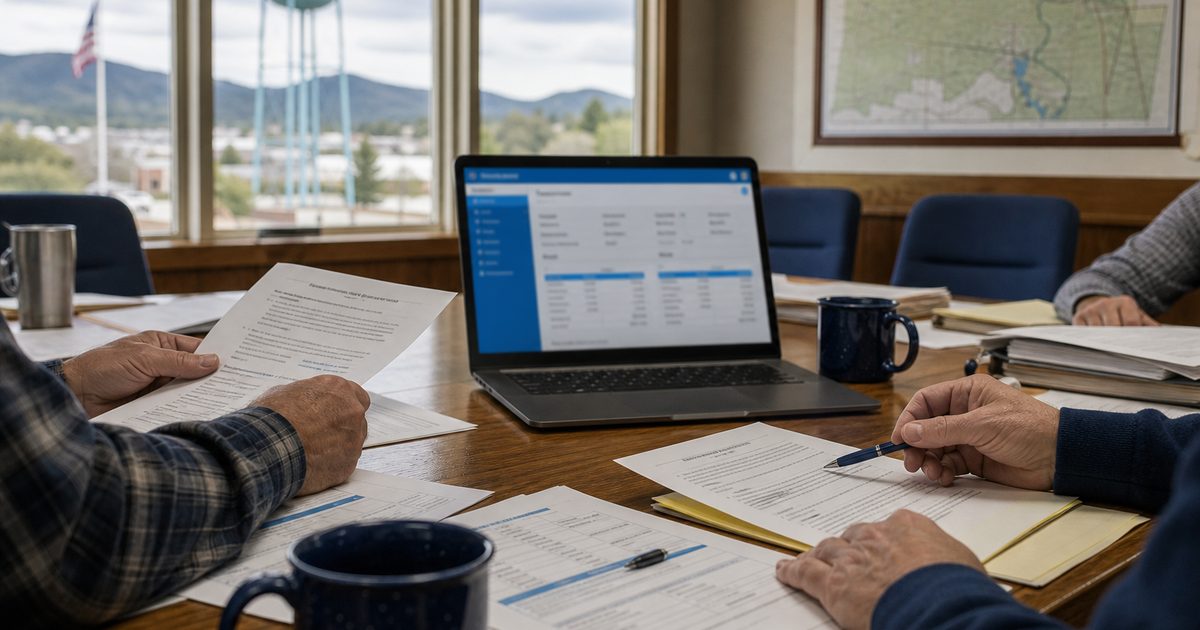
When a rural water board in Arkansas starts looking at utility billing software, someone almost always asks: “Is this on an approved vendor list?”
That question makes sense. Municipal utilities sometimes buy through state contracts or formal procurement catalogs. Volunteer-run water associations and community water systems usually do not work that way.
Most Arkansas rural water associations approve billing software through their own board vote, budget line, and contract review, not a statewide pre-approved catalog. Here is what that process typically looks like, what to document, and how boards move from “we should look into this” to a signed agreement they can stand behind.
Quick answer
Arkansas rural water associations typically approve utility billing software with a board motion and vote, a budget line for setup and ongoing costs, review of the service agreement, and brief member communication. There is no single statewide pre-approved vendor list for community water systems; each board evaluates options and documents the decision in meeting minutes.
There Is No Single Arkansas “Pre-Approved” Billing Software List
Let us be direct: Online Water Bill is not on an official Arkansas state pre-approved vendor list for rural water association billing software. We are not aware of a statewide catalog where community water boards can pick utility billing software the way some larger public agencies pick from a contracted vendor roster.
That does not mean approval is impossible or risky. It means your board follows your governing documents and normal association process:
- Board authority. Most associations delegate software and service contracts to the board, sometimes with a dollar threshold that requires a recorded vote.
- Budget approval. Setup fees, support, and any recurring costs belong in the budget the board adopts, or in a budget amendment if timing does not line up with your fiscal year.
- Contract review. Someone reads the service agreement, support terms, data handling, and cancellation language before anyone signs.
- Documentation. Meeting minutes show who moved, who seconded, how the vote went, and what the board authorized.
If your association is a municipal utility or special district with stricter procurement rules, your process may differ. When in doubt, compare your bylaws to what you are buying and ask your attorney early rather than after the vote.
What Boards Typically Need Before Signing
Every association is slightly different, but most successful approvals include the same building blocks. Treat this as a checklist for your next meeting packet.
1. Board motion and vote
Put the decision on the agenda as an action item. A typical motion authorizes the president or manager to enter a service agreement with a named vendor, up to a stated dollar amount, for a stated purpose (for example, “utility billing, customer portal, and online payments”).
Record the vote count. If your bylaws require a quorum or a supermajority for contracts above a threshold, note that the requirement was met.
2. Budget line or amendment
Boards want to know where the money comes from. Utility billing software may be a one-time setup plus ongoing support, or a different pricing model depending on the vendor. Show the board the quote, how it fits the current budget, or what amendment is needed.
Our pricing guide explains how Online Water Bill quotes setup by connection count so treasurers can bring real numbers to the table.
3. Service agreement review
Do not vote blind on a verbal promise. The board should see the written agreement: scope of service, support hours, data ownership, security practices, termination, and who signs on behalf of the association.
Share our Service Agreement and Support Agreement & SLA with officers before the meeting so questions come up in public session, not after signatures.
4. Member communication
Members rarely need a referendum to change back-office billing software, but they do appreciate plain language about what is changing. A short note in the newsletter or a paragraph on the agenda for the next member meeting prevents rumor and surprise.
Explain what customers will see (portal, online pay, printed bills) and what stays the same (office hours, check payments, phone support).
5. Documentation for the file
Keep a clean paper or digital trail: agenda, backup materials (quote, agreement redlines if any), signed contract, and approved minutes. Future boards and auditors should be able to reconstruct why the association chose this vendor and this price.
Questions to Ask Vendors at the Board Table
Before you vote, ask the vendor (or your demo contact) questions that matter to volunteer boards, not just IT departments:
- Who owns our data? Can we export accounts, reads, and history if we ever leave?
- What does setup include? Data import, training, meter route mapping, first billing cycle support?
- How are online payments handled? Who is the payment processor, and does the association store card numbers?
- What does support look like? Hours, response times, and who answers when the bookkeeper is stuck on billing day?
- What do other Arkansas associations use this? Ask for references or a live customer portal you can browse.
- What happens if we outgrow it? Connection limits, pricing changes, and contract term length.
- What is the realistic go-live timeline? See our switching guide for what migration usually involves.
The Association Guide bundles screenshots, FAQ, and switching steps in one printable packet you can attach to the board packet.
What to Put in Meeting Minutes
Good minutes protect the board. They do not need to be a transcript, but they should capture the decision clearly. Include:
- Agenda item title. Example: “Approval of utility billing software service agreement.”
- Summary of discussion. One or two sentences: options considered, recommendation from staff or a committee, member comments if any.
- Exact motion text. Who made the motion, who seconded, and the outcome (passed 5 to 0, failed, tabled).
- Authorization. Who is authorized to sign and up to what amount.
- Any conditions. Example: “Pending review by association counsel” or “Subject to budget amendment at the July meeting.”
Avoid copying proprietary pricing tables into public minutes if your policy treats quotes as confidential; referencing “quote dated June 12, 2025, on file” is enough.
Comparing Options Without Analysis Paralysis
Boards often stall because every option sounds plausible. Narrow the field with criteria your association actually cares about:
- Fit for your association. Enough structure for tiered rates, meter reads, and online pay from small rural systems to cities with tens of thousands of connections.
- All-in-one vs. patchwork. Meter reading, billing, mailing, portal, and payments in one place vs. multiple tools held together by manual work.
- Total cost. Setup, support, hidden transaction fees to the association, and staff time to operate the system.
- Switching risk. Who helps import data and who is on the phone the first time you run bills?
- Proof in the field. Live portals and references from similar Arkansas associations.
Read what software rural water associations use for an honest comparison of spreadsheets, legacy desktop tools, municipal platforms, and purpose-built rural billing software.
When to Involve an Attorney
Not every billing software purchase needs a lawyer, but some associations should not skip legal review:
- Large dollar amounts relative to your budget or bylaws threshold for competitive bids.
- Unusual contract terms: multi-year lock-in, automatic renewal, liability caps, or indemnification language you do not understand.
- Data and privacy obligations if your counsel has already advised on member data or payment compliance.
- Disputes or split votes where a recorded legal opinion helps the board act consistently with bylaws.
- Special district or municipal structure where state procurement or open records rules may apply.
A short review of the service agreement before the vote is cheaper than unwinding a bad contract later. Your attorney does not need to understand meter reading; they need to understand who is obligated to whom, for how long, and with what data.
A Real Arkansas Example: Deer Community Water Association
Deer Community Water Association in Newton County, Arkansas uses Online Water Bill today for billing, meter reading, customer portal access, and optional online payments. The board did not pick us from a state catalog. They evaluated whether the system fit a volunteer-run rural system, reviewed the agreement, and moved forward with a documented decision.
After go-live, customer complaint calls that once piled up many evenings dropped to zero. Members who want to pay online can; members who prefer checks still can. Browse their live customer portal or read the full Deer, Arkansas case study.
That path is typical for rural Arkansas boards: practical demo, clear pricing, board vote, signed service agreement, then guided switching with support through the first billing cycles.
Frequently Asked Questions
Is there an Arkansas state-approved list of utility billing software vendors?
Community water associations and many rural systems do not purchase billing software from a single statewide pre-approved vendor catalog. Approval usually happens through the association’s own board vote, budget process, and contract review. Larger municipal utilities may follow different procurement rules; check your bylaws and counsel if you are unsure.
Does our board need a formal vote to approve billing software?
Most associations require a board vote to authorize contracts and spending above routine operations. Put the software decision on the agenda, make a clear motion, record the vote in minutes, and authorize a specific officer to sign. Your bylaws may set dollar thresholds or notice requirements.
What should we budget for water billing software?
Budget for vendor setup and onboarding, any ongoing support, staff time during migration, and printing or mailing if not included. Online Water Bill uses a one-time setup quoted by connection count rather than a monthly platform fee to the association; see our cost guide for details.
How long does board approval usually take?
Many boards take one meeting to review materials and vote; others table once to gather quotes or legal review. Allow time for a demo, packet distribution before the meeting, and signing after the vote. Migration and go-live are separate from the vote itself; plan both on your calendar.
Can we share materials with the board before the vote?
Yes, and you should. Send the Association Guide, service agreement, pricing quote, and switching timeline before the meeting so discussion stays focused. Boards approve faster when officers are not hearing the pitch for the first time in the room.
The Bottom Line
Arkansas water boards approve utility billing software the same way they approve other major vendor relationships: motion, vote, budget, contract review, and clear minutes. There is no shortcut through a statewide pre-approved list for most rural associations, but there is a straightforward path when you bring the right documents to the table.
If your board is comparing billing systems, start with the Association Guide, review our Service Agreement, and contact us for a demo tailored to your association’s size and workflow. We are happy to help your officers prepare a packet the board can vote on with confidence.
Preparing a board vote on billing software?
We will walk through demo, pricing, agreement terms, switching timeline, and what other Arkansas associations did before they signed.